Dear Friend —
We are weeks away from the biggest migration of money in market history.
On December 8th, SpaceX insiders will finally be able to sell $600 billion worth of stock.
I believe the lion's share of it will flood into one small company...
99% of investors have never heard of it.
But it does the one job the entire space economy cannot run without.
And this piece of paper is what led me to it...
A quiet filing by former NASA scientists.
And I am confident it will ignite a second wave of millionaires.
17,000 of them by my math... maybe far more.
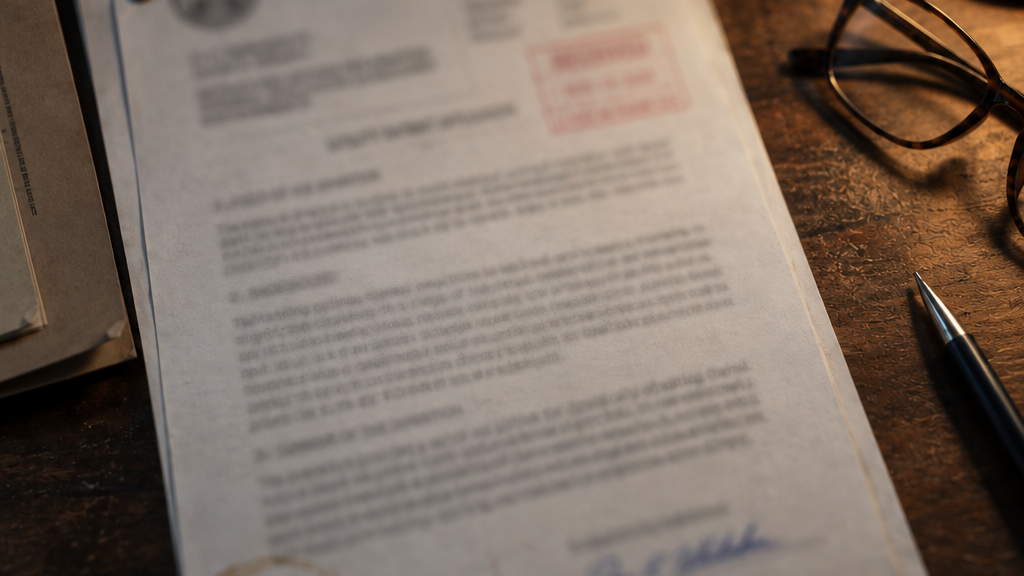
This is not a merger.
It isn't a new rocket.
It's not an IPO, a product launch, or some penny-stock rumor.
It's an application.
Signed by lawyers.
Docketed at the Federal Communications Commission on July 1st, 2026.
Filed by a $14 company most investors couldn't name if you paid them.
But printed inside it is a name you know very well.
SpaceX.
Elon Musk's $2 trillion space empire...
Tangled up, in black and white, with a company one five-hundredth its size.
What is Elon doing here?
He isn't here by accident.
Elon only shows up when he needs to make something happen... the way PayPal happened, the way Tesla happened, the way rockets that fly themselves home happened.
What's inside this document eclipses all of that.
Because the thing this application is asking to activate has never existed before in human history.
And Elon's mission of the last 24 years... now hinges on it.
Behind this application sits a first-of-its-kind contract in American history...
Commissioned by NASA.
While all eyes were fixed on the largest IPO in history...
This landed in a quiet federal queue that almost nobody watches.
The biggest story of the next decade...
Hiding in a government database.
Bigger, I believe, than anything the space business has handed investors so far.
And right now, virtually nobody on Wall Street knows it exists.
That's not an accident. That's an opportunity.
Now, I know what Wall Street thinks about space companies.
One short-selling firm actually put it in writing...
The day after the SpaceX IPO.
They called the industry:
I've been on Wall Street long enough to have heard that speech before.
They said the internet was a fad.
Then it wired the planet...
And sent Amazon up as much as 380,000%.
They laughed at electric cars.
Then Tesla humbled Detroit...
And paid its IPO investors more than 42,000% at the peak.
They said a rocket could never land itself and fly again.
Then the man who built one took his company public...
And it became the most valuable stock market debut the world has ever seen.
Estimates say the earliest SpaceX investors watched checks in the tens of millions...
...turn into stakes worth tens of billions by the IPO.
Every single time the experts laughed...
The people who read the paperwork instead got rich.
And if you think that's a new pattern...
Let me show you how old it really is.
In 1920, the New York Times mocked the father of modern rocketry in an editorial...
Sneering that he lacked the knowledge "ladled out daily in high schools."
The paper printed its correction in July 1969. The day after Apollo 11 left for the Moon.
In 1956, Britain's own Astronomer Royal called space travel "utter bilge"...
And added that nobody would ever put up the money for such a thing.
Sputnik flew the following year.
And the thing nobody would ever fund just became the largest IPO in history.
And now, the next situation has begun... starting with this form here.
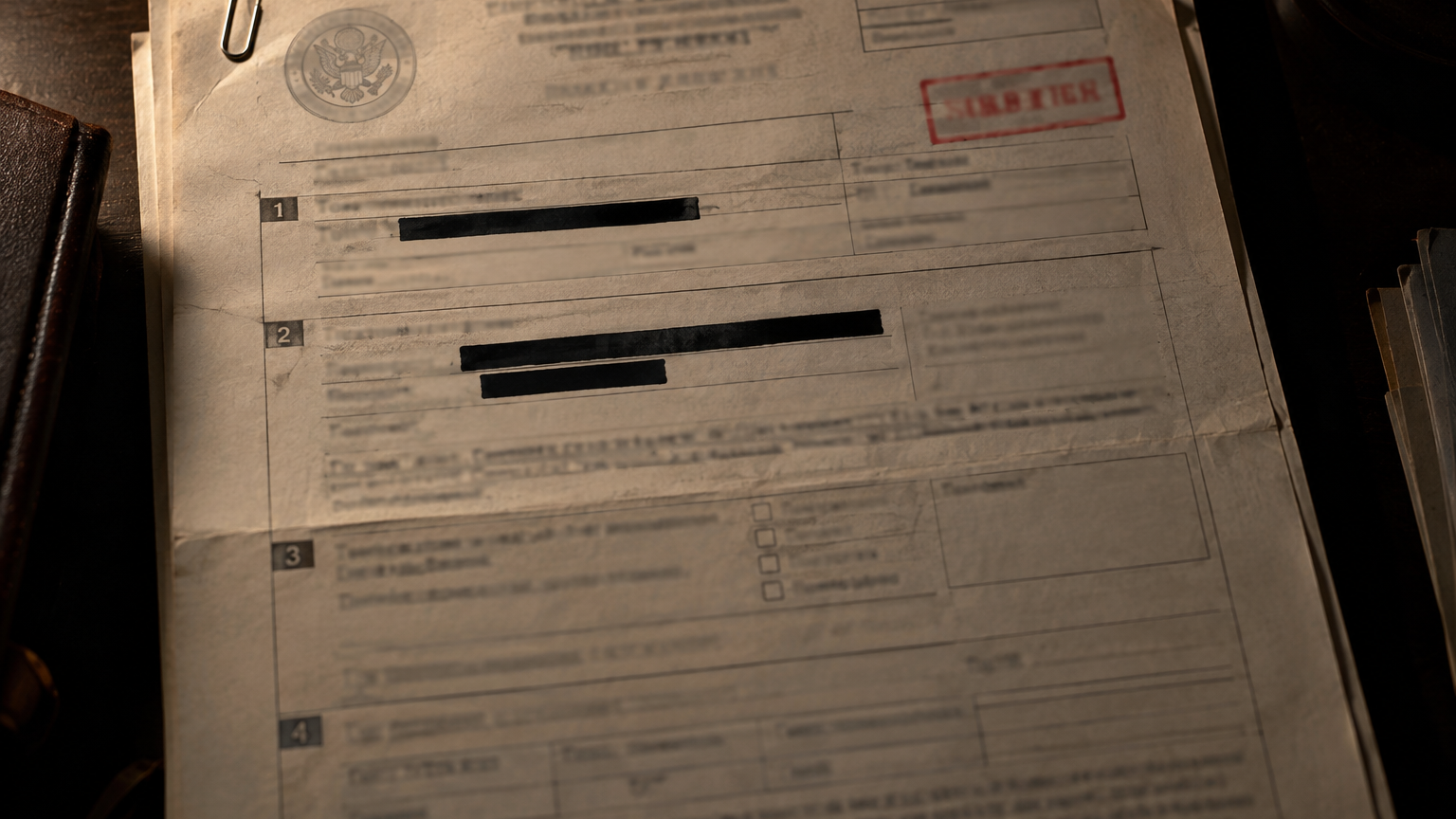
I'm going to open this application and walk you through it.
You'll see exactly what was filed, and who filed it.
And why I believe it marks the start of the biggest wealth event since the internet went commercial.
And you'll see why December matters...
More than any month on the financial calendar this year.
What you do with the next few minutes could matter to your retirement...
Your kids...
And the version of you that looks back at this December...
One way or the other.
Here's what the people who got rich in June already understand.
The first window belonged to them.
The second one doesn't have to.
Let me show you what a window looks like while it's open.
On June 11th, SpaceX went public.
The largest IPO in the history of the world.
And by the first closing bell, roughly 4,400 SpaceX employees were millionaires.
Not just the executives.
Welders. Technicians. Contract workers with stock grants they'd half-forgotten.
Now here's the part almost everyone missed.
The stock that did all that minting...
Barely traded.
At the IPO, only about $1 of every $20 was allowed to change hands.
The rest was frozen. Locked by the rules of the offering itself.
Executives. Early investors. Funds that waited 20 years for this.
All of them holding a fortune they could see but couldn't touch.
And those rules come with an expiration date.
When that much money comes loose in a market this small, it doesn't trickle.
It floods into where the insiders know it needs to go next.
The money that made those 4,400 millionaires in June was the sliver that traded...
That $1-of-every-$20 float you just saw.
The money coming loose when the freeze ends for good?
As much as 19 times that.
If the second wave mints millionaires at just HALF the first wave's rate...
That's more than 17,000 brand-new millionaires.
My honest belief?
It does better.
Because this time, the money knows exactly where it's going.
And I believe the people it enriches will be a brand-new class of investor.
The press will need a name for them.
I already have one.
The Space Millionaires
So here's exactly what I'm going to do for you in this message.
First, I'm going to open the application sitting on my desk...
And show you what it actually says. In plain English.
Second, I'm going to show you where I believe the unfrozen money is headed...
And how to claim your own stake ahead of it, from any regular brokerage account.
No private funds. No accredited-investor forms.
Just a simple firm, trading for $14 right now.
One I believe has the potential to surge 1,000% or more in the coming months...
Based on a first-of-its-kind contract commissioned by NASA.
And third, I'm going to hand you something for your time.
Free. Nothing to buy.
Before this message ends, I'm going to name two space stocks I'd get RID of before December.
So whatever you do... stay with me. It will be well worth your time.
Because that gift is the smallest thing I'm handing you today.
And if I'm right about what happens when the freeze ends, you'll be seeing stories like these before spring:
“Second Wave of Space Millionaires Confirmed as SpaceX Freeze Lifts”
“How a Single FCC Filing Turned Into a Fortune for Early Readers”
“The Little Space Company Nobody Watched Just Became the Moon's Phone Company”
Life-changing money never announces itself.
It doesn't headline the evening news.
It shows up early, in boring places.
In places most people never think to look.
That's exactly where you're standing right now.
But before I open this document, you deserve to know who's talking to you.
Meet the Founder
 My name is Dylan Jovine.
I grew up on food stamps in Queens.
No trust fund, no connections, no Ivy League diploma.
In 1991, a legendary banker named Peter Jacquith... the man who'd helped save New York City from bankruptcy... took a chance on me when nobody else would.
He taught me that studying a stock is like reading a short history book.
Then he'd send me to the library to read the actual paper.
I couldn't believe people got paid to do this.
That lesson became my whole career.
For almost 20 years now, readers have followed my research through booms, busts, and everything in between.
I recommended IonQ when quantum computing was a punchline on trading desks.
It handed readers a 944% gain after our entry.
I recommended Palantir at $7.38, when the smart money had left it for dead.
It went as high as $207 — a 2,712% gain — after our entry.
And I recommended Rocket Lab at $3.80... back when Wall Street treated the entire space sector like a graveyard.
It went on to a 3,800% gain after our entry.
Nearly 40 times your money.
Enough to turn $10,000 into roughly $390,000.
Three calls that looked wrong the day I made them.
Three that paid the readers who acted anyway.
Those are peak gains, measured from my recommendation dates. Not every reader caught every point, and profits were banked along the way.
Nobody sells the exact top... including me.
It wasn't the first time reading an obscure document paid better than watching the ticker tape.
By 2007, I'd already warned my readers that housing was a house of cards and the derivatives under it were poison.
I was called a pessimist... right up until Lehman collapsed.
Then in March 2009, eleven days before the exact bottom, I went on Fox Business and told Americans to buy.
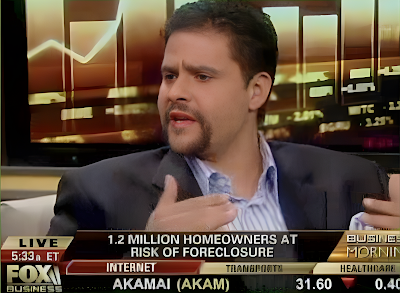
I said a market at 6,500 was like a car dealership marking everything 90% off.
People thought I'd lost my mind.
Within a year, the market was up more than 60%. Within a decade, it had more than quadrupled.
And the stocks I was telling investors to buy in that wreckage?
American Express at $14.24... good for 646%.
Starbucks at $8, which soared to $56... a 700% winner.
AutoNation near $10... another 459%.
Eleven years later I did it again... calling the bottom of the Covid crash in March 2020, almost to the day, while the world was panic-selling.
I told my readers to buy. Not sell. Buy.
Magnolia Oil & Gas doubled.
DraftKings returned 124%.
Floor & Decor ran as high as 155%.
And Scotts Miracle-Gro... yes, the lawn-and-garden company... climbed as high as 195%.
Years before any of that, my trades got so consistently profitable that I was accused of insider trading.
I sat down with the SEC... no lawyer, just my brokerage records and an explanation of how I invest. After a couple of hours we shook hands, and I never heard from them again.
A federal regulator went looking through everything I'd ever done.
What he found is the exact methodology I used that brought me to the opportunity I want to share with you today.
Now... I'm not telling you any of this to brag.
I'm showing you because every one of those winners had a moment.
A moment when a regular investor could've stepped in ahead of the crowd... and didn't, because the signs pointing to them were buried in piles of corporate and government filings the average person will never read.
This message exists because I believe you're standing inside another one of those moments right now.
The biggest I've seen in my career.
If I'm right, it's the moment that mints the next 17,000 millionaires.
And this one comes with a date attached.
December 8th, 2026
That's the day the freeze I showed you earlier ends completely — and more than $600 billion explodes out of SpaceX.
You don't need to be rich to get positioned.
You don't need special access, private funds, or a friend at a hedge fund.
A regular brokerage account and a few quiet minutes are enough.
As I write this, your first share would cost $14.
But to see where all that unfrozen money is headed...
Start with the man whose machine is dragging the entire space economy behind it.
Let me tell you how Elon Musk actually makes people rich.
It's not an invention.
Plenty of people invent things.
It's transformation.
He walks into an industry and completely changes what everyone thinks is possible.
In 1999, paying someone over the internet meant mailing a check and praying.
Musk built PayPal.
Three years later, eBay bought it for $1.5 billion... and paying online became something your grandmother does without thinking.
In 2008, the electric car was a science-fair project with a body kit.
Musk shipped one that embarrassed sports cars.
Today, Tesla is worth more than the next 37 automakers combined.
Then came the one they all swore was impossible.
Musk landed a rocket on its tail... and flew it again.
Last year alone, SpaceX put 165 rockets into orbit. Nearly one every other day.
Roughly 85% of everything America launched.
Almost twice as many launches as the entire nation of China.
Every one of those transformations minted its own class of millionaire.
PayPal's founders and earliest employees became known as the "PayPal Mafia" and became among the most successful tech financiers of all time — people like Palantir founder Peter Thiel, Max Levchin, who founded the "buy now, pay later" company, Affirm, and Reid Hoffman, the founder of LinkedIn.
Tesla's everyday believers got so rich, the press coined a word for them: "Teslanaires."
And SpaceX's IPO put 4,400 new millionaires on the map.
Transformation pays the people standing near it.
Which brings me to what Musk's machine is doing right now.
The World Economic Forum says that space economy is set to nearly triple to $1.8 trillion by 2035.
Meaning that in less than a decade, the space economy will be almost half as large as the United Kingdom.
One of the six biggest economies on Earth.
And here's the thing...
When Goldman Sachs published the same $1.8 trillion forecast this August, Musk himself responded.
Except...
There's one problem with this entire trillion-dollar build-out.
A flaw so big it hangs over Elon Musk himself.
His company holds one of the biggest contracts of his career from NASA to put astronauts back on the Moon.
And I believe whether that contract pays off now runs through a company trading for $14... that hardly anyone outside of Elon and a handful of NASA scientists knows exists.
But this $14 stock is right now the key to the success of Elon's $2 trillion space empire.
Here's why:
The Essential Space Network
Everything in space has to do one thing before it can earn a dime.
It has to call home.
A satellite that can't send its data down is a very expensive piece of junk.
And here's what almost nobody outside NASA seems to understand.
The Moon is a dead zone.
Everyone's driven through one. Calls drop. Bars vanish.
Now picture that... 239,000 miles from the nearest tower.
The entire far side of the Moon can't see Earth. Ever.
And at the lunar south pole... the exact region NASA plans to land astronauts...
Earth barely clears the horizon.
NASA, in its own documents, outlines exactly how big this problem is.
“[There are] areas on the Moon, like the far side or the South Pole, where there is limited or no direct viability to antennas on Earth.”
It gets worse.
When a spacecraft swings behind the Moon, it goes dark. Completely.
On the Artemis missions, that blackout runs about 41 minutes.
41 minutes where mission control sits in silence... with human beings on the other side.
In 1969, we accepted that. There was no choice in the Space Race with the USSR.
Today, with a $93 billion program on the line... it's unacceptable.
And NASA's leadership says it out loud, on the record.
Ken Bowersox... the agency's associate administrator for space operations, and a former astronaut... puts it plainly:
Kevin Coggins, the man who runs NASA's communications networks, goes further:

So understand what's really at stake here.
America is going back to the Moon to stay.
Private industry is going with it.
SpaceX alone is already worth more than the whole space economy is forecast to become by 2035.
And Ron Baron, the legendary fund manager who's backed Musk's companies for years says...

Which means $1.8 trillion is just the beginning, as Musk himself said.
And none of it works without the one thing the Moon has never had.
A network.
No signal, no science.
No science, no mining, no bases, no business.
No business... No Moon economy.
Which brings me back to the application on my desk.
Because while the giants were busy building rockets and landers and headlines...
One small company, trading for $14 today, was quietly solving the problem.
And they didn't just solve it on a whiteboard.
They put it in writing.
At two different agencies of the United States government.
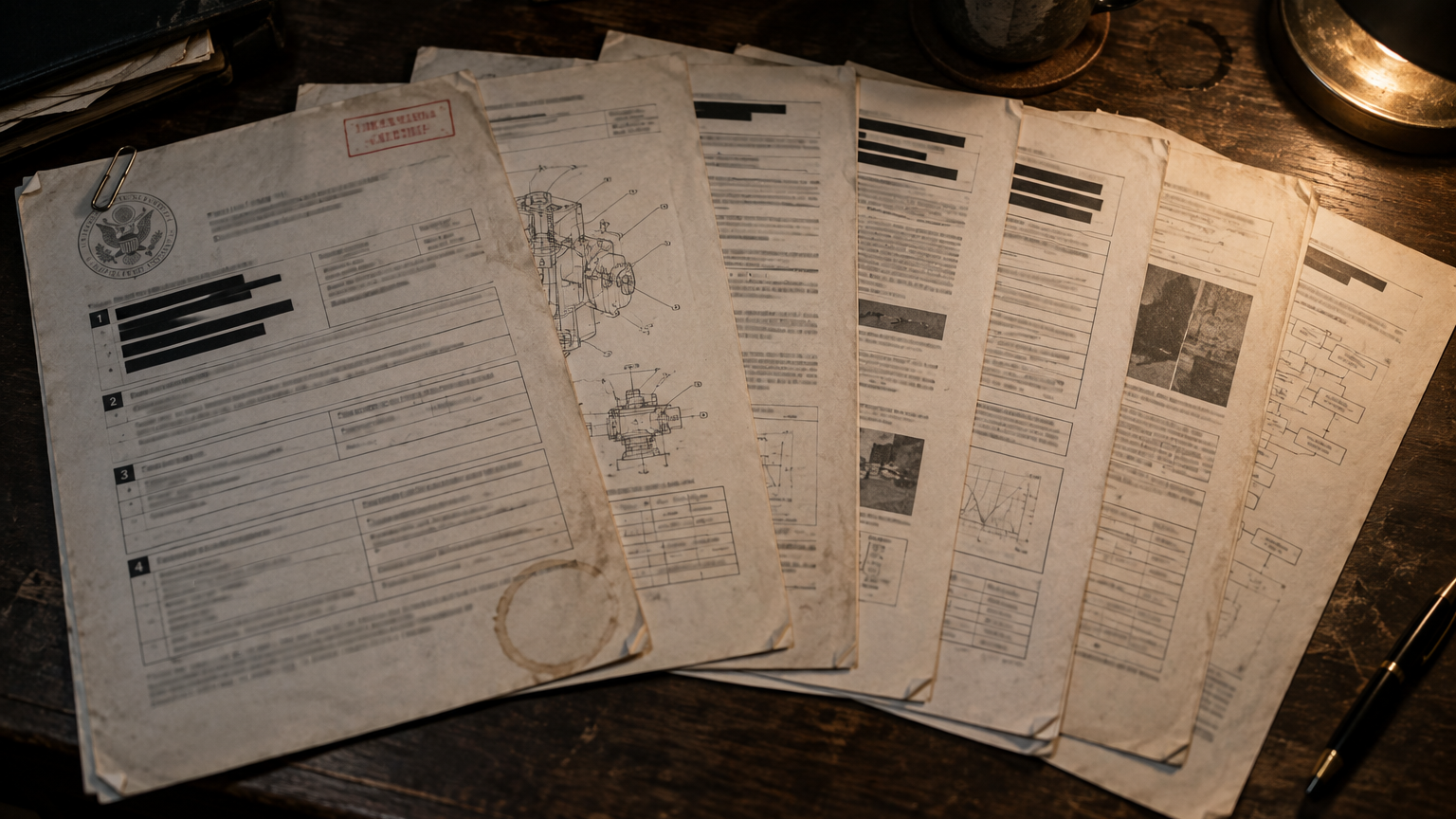
What this document asks for, in plain English, is permission to switch on a network.
A small constellation of satellites... parked in orbit around the Moon.
And together, they're designed to do three jobs.
Job One
Carry the long-haul calls... every voice channel, every video feed, every gigabyte of science... between the Moon and Earth.
Without the blackout.
Job Two
Relay signals across the lunar surface itself. So a rover in a crater can talk to a lander over the ridge... even when neither can see home.
Job Three
Broadcast position and timing.
Think GPS. For the Moon.
There has never been anything like it. Ever.
To switch it on, the little company had to ask the government to write a new set of rules.
The FCC's rulebook was written for satellites circling Earth.
Nobody ever sat down and wrote rules for a telephone network around the Moon.
There was never a reason to.
The last time Washington had to invent rules for a network ... it was radio, a century ago.
The company born at the center of that was RCA.
Its stock rose nearly 20,000% before the decade was out... one of the biggest runs in stock-market history.
This document is asking Washington to do it again.
But here's where this goes from interesting... to historic.
This little company didn't file that application on a hope and a dream.
They filed it because NASA already hired them.
You see, the agency knew everything I showed you earlier. The dead zones. The blackout. The missing network.
So NASA did something it had never done before.
It ran a formal competition... for the job of building and operating communications and navigation around another world...
And handed the job to a commercial company.
The first time in the agency's history.
Not a research grant. Not a study.
A services contract.
The same way the government buys electricity, or phone lines, or freight.
Because NASA doesn't want the job of managing a Moon network.
Instead, it has handed the task to a small, public company... trading for $14.
And before you wonder whether a NASA first like this really means anything... remember the last time the agency made a bet like it.
The SpaceX Legacy
In 2008, NASA handed a first-of-its-kind services contract to a small company called SpaceX.
It just made Elon the world's first trillionaire... and minted 4,400 millionaires by the closing bell.
And it goes further.
In NASA's Moon to Mars architecture papers... the master planning documents for the next two decades of exploration...
This relay network is written in as part of the infrastructure itself.
“The LCRNS project is part of the Artemis Moon to Mars architecture documentation.”
And the design is the same trick behind every network you've ever used.
Your phone doesn't shout across the country. It whispers to a tower, and the tower does the heavy lifting.
Same logic... 239,000 miles out.
Put the muscle in orbit, and every lander, rover, and spacesuit on the surface gets smaller, lighter, and cheaper.
The whole Moon economy rides on rails somebody else already paid to lay.
Now. You might be wondering whether anyone else is building one of these.
The honest answer is: they're trying.
Europe has a program.
It's called Moonlight... and at last count, its ministers had committed about $201 million to it.
$201 million. Against a NASA services program.
Europe's first step is a single pathfinder satellite... hitching a ride to the Moon on someone else's lander.
One satellite. Against a constellation.
Europe
Europe (Moonlight): ~$201M · 1 pathfinder satellite
The American network
The American network: a constellation · NASA services contract
And by their own timeline, Europe hopes for a handful of satellites in lunar orbit by the end of the decade.
By then, the American network is scheduled to be finished... covering the lunar south pole in time for the next Artemis landing.
This race has a leader.
The gap is measured in years.
And who do you suppose carries all of this hardware to space?
Every mission this company has flown rode there on a SpaceX rocket.
And the relay satellites themselves are booked to ride on Musk's rockets too.
His machine hauls it.
Their network runs it.
And here's the part almost nobody has noticed. Follow the money in a circle.
NASA pays this company to run the Moon's network.
NASA also pays Elon billions to land astronauts on it.
And when his lander sets down at the south pole... where Earth barely clears the horizon... its calls home are designed to run through their satellites.
Elon needs their network.
Without their network, his NASA contracts are dead-on-arrival.
NASA has already said “space communications aren’t optional.”
Meaning Elon's rockets will only land in the world's largest storage units if there isn't a lunar network operating.
So let's put the whole case on the table.
We know the Moon program cannot function without a network.
NASA wrote that down.
We know NASA ran a competition and hired one company to build and run it. That's a signed contract.
We know that company has formally asked the FCC to switch it on.
That's the document on my desk.
We know the hardware rides to space on Musk's rockets.
And the first satellite is already being fitted with NASA hardware for the trip up.
One problem. One contract. One application. One company.
Now picture the morning it all switches on.
Every lander, every rover, every experiment on that surface... government or private, friend or rival... calling home through hardware one small company operates.
Follow the money in a circle.
You can own a piece of that company today... for $14.
What you just saw is a paper trail... sitting in two federal databases... that anyone can follow and almost no one has.
Now let me show you what history pays when this pattern shows up.
Because America has run this exact experiment before.
Three times in the past four decades.
And all three times, the same kind of company walked away with the largest fortune on the field.
Start with the one that just happened.
You may have lived through it without noticing.
Two years ago, a company called AST SpaceMobile was trading around $2 a share.
Their idea sounded like science fiction.
Connect ordinary cell phones... the one already in your pocket... directly to satellites overhead.
No towers. No dead zones.
Wall Street snickered.
Then the technology started working.
And the market repriced the company like it was correcting a typo.
From its 2024 low of $2.01, the stock ran as high as $115.77.
A 5,660% move in under two years.
Put $10,000 on that rung... and you're holding roughly $575,000.
That's what the market pays for space connectivity. Not landers. Not rockets. The connection.
Now go back one boom.
In 2002, the telecom crash had turned Wall Street into a junkyard. And a company called American Tower... which owned boring steel cell towers... traded as low as $2.74.
Here's what the sellers forgot.
The wireless age wasn't optional. It was coming no matter what.
And every carrier in America... every phone in every pocket... would have to rent time on those towers to exist.
The carriers fought each other to the death.
The handset makers rose and fell.
The towers just collected.
From that 2002 low to its 2021 peak of $280.67... American Tower returned 10,154%.
The same $10,000 on this rung... just over $1 million.
That's a millionaire... minted by boring steel towers.
Now the granddaddy.
February 1990.
A company called Cisco goes public at $18 a share.
They didn't make computers.
They didn't make software anyone bragged about.
They made the plumbing... the routers and switches that carried the internet's traffic.
The backbone.
And as the internet went from novelty to necessity, everything... every email, every website, every transaction... had to pass through their equipment.
By March 2000, Cisco's total return since its IPO was just over 100,600%.
$10,000 at the debut... about $10 million at the peak.
Three different decades. Three different technologies.
And the exact same winner every single time.
Not the flashy names on the magazine covers.
The network underneath them.
The layer everything else has to pay... just to participate.
The first space-connectivity play paid 5,660%... and that was just for connecting Earth phones to Earth orbit.
The wireless boom paid its towers 10,154%.
The internet boom paid its backbone 100,600%.
And now a $1.8 trillion build-out... the one I showed you earlier... is reaching past all of it. For the Moon.
$10K → ~$575K
$10K → ~$1M
$10K → ~$10M
Every lander. Every rover. Every base, every experiment, every mining claim, every astronaut's heartbeat monitor.
All of it will rent time on one network to exist.
This network... owned by a company you can pick up in a regular brokerage account for $14.
Except this time, there's a difference.
The internet had a dozen equipment makers fighting for the job.
Wireless had three big tower companies.
The Moon... has one network with a NASA contract and an FCC application.
One.
One company holds the NASA contract to run it.
One company filed the FCC application to switch it on.
Whoever owns that wiring when the migration lands... gets to ride the 5,000%, 10,000%, even 100,000% wave.
You're standing in front of the most urgent window I've seen in 35 years... and it has an expiration date.
Go back to June 11th one more time.
The first window was never really open to you.
It belonged to the insiders.
Employees with decade-old stock grants.
Funds that bought in years before trading began.
By the time the ticker went live at $135... the biggest gains were already theirs.
That was the first window. And it's closed.
The Second Window is different.
The Second Window
It opens December 8th... the day the freeze lifts for good and $600 billion is finally cut loose to rush into the next major leg of the space buildout.
And this time, you can be standing where the money lands... before it gets there.
That's the deal on the table today.
Now, you might be wondering...
If the Moon's network is such a prize...
Why hasn't Big Tech just built one? Why hasn't Musk himself?
The answer explains why this door is so narrow...
And why it's closing so fast.
Start with the door everyone assumes is open. It isn't.
Wall Street thinks any giant with a checkbook could build a Moon network next quarter.
Three walls say otherwise.
Wall one. The customer is taken.
A network with no callers is just metal in the sky. And on the Moon, for years to come, the paying traffic runs through one customer above all... the United States government.
NASA already held its competition for this job. It already picked its provider. The contract is signed.
A second network wouldn't be a rival. It would be an empty phone company.
Wall two. The clock.
NASA needs the lunar south pole covered in time for the next Artemis landing... targeted for early 2028.
Think about what a challenger would have to do between now and then.
Design the satellites. Win a government customer that already chose someone else. Clear the regulators. Build. Test. Launch. Operate.
Europe has been trying exactly that with its Moonlight program... and by its own timeline, it hopes for a handful of satellites by the end of the decade.
The race isn't close. The race is over, and most of the market hasn't noticed.
Wall three. The rulebook.
Remember the waiver in the application on my desk?
The rule it asks the FCC to bend is the Table of Frequency Allocations... the government's master map of the airwaves.
Who may transmit what, where.
That map has no entry for a network around another world.
Most applications ask the FCC for a new lane on an existing highway.
This one is asking permission to build the first highway... to a place that's never had a road.
The first company through this process isn't just getting a license.
It's writing the precedent every future applicant will be measured against.
In networks, that's how a head start becomes a standard... the same way RCA, born at the center of radio's first rulebook, went on to launch America's first broadcast network and collect on the patents the young industry ran on.
That kind of control is what carried its stock nearly 20,000%.
The backbone became the standard. The towers became the standard.
Whoever covers the ground first is the network everyone else builds against.
And what about Musk?
Musk doesn't need to own the Moon's network.
He gets paid either way... because the satellites that make it up are booked to ride his rockets.
In this gold rush, he sells the train tickets no matter whose freight is on board.
And for Elon... he is going to support whoever gets the network turned on right away... because his NASA contracts rely on someone fixing the dead zone problem asap.
And one small company is already through the paperwork... with a signed contract in one hand and a pending license in the other.
Now let me show you just how big their head start really is.
Because this head start isn't a press-release head start.
It's operational.
This Company's Big Head Start
This company isn't drawing the Moon's network on a whiteboard.
They've been flying there.
Mission after mission... every single one carried up on a SpaceX rocket.
Their engineers have already put hardware on the lunar surface.
The first satellite of the network is being readied for its ride right now.
And here's the number I promised you. Five.
The entire network is five satellites.
But don't mistake small for easy.
Each of those five has to survive 239,000 miles from the nearest repair... after months of flight just to take its post.
Each one talks on airwaves the FCC's rulebook has no category for... that's the waiver you saw.
And the first company through that process writes the rules everyone after gets measured against.
And even if a challenger somehow built five of its own... it would arrive to find the biggest customer on the Moon already signed with somebody else.
That's how five satellites becomes a fortress.
The hardware is brutal, the rulebook has no door, and the customer is taken.
And the contract behind it all isn't a one-shot payday.
It's a services deal... structured to run five years, with options for five more.
A decade of the U.S. government as your anchor tenant.
Then there's the business model.
This company's own chief executive describes the network, in the company's public statements:
Think about the last phone bill you actually studied.
Now imagine writing that bill... for every government agency, every corporation, and every research program that ever wants to have stable comm-networks around the Moon.
The towers collected rent from the wireless boom.
This network means to collect it from the Moon... one minute at a time.
Understand what I believe is sitting in front of you.
Every rung of the ladder I showed you turned $10,000 into at least half a million dollars.
The backbone did it. The towers did it. The first space-connectivity play did it.
I believe this company is the fourth rung.
If the 17,000 new millionaires I told you about get minted anywhere, I believe it's here.
And I believe the full force of that move belongs to the people positioned before December 8th.
I'm not the only one who's found it, either.
As of the latest filings, 510 institutional owners had reported positions in this little company.
Combined stake: $3.42 billion.
Who, exactly?
A Boston buyout giant with the single biggest stake of them all.
The world's largest asset manager.
The index funds half of America's retirements ride on.
And the quant fund which delivered a return of 1.5 million percent over the last 30 years is going big. They opened a stake in this company in spring... and doubled their position size by summer.
Institutional positions grew more than 70% in the most recent quarter alone.
These aren't lottery players. Funds file their holdings under oath, quarter after quarter.
They wait for clear shots. And 510 of them have quietly moved into position.
The biggest money of all... the SpaceX wealth... hasn't even been allowed to move yet.
That's what December changes.
Your stake doesn't take wealth to claim... as I write this, a single share still costs $14.
So here's what I've done.
I've written up the complete case. The company. The name. The ticker. My buy-up-to price.
The story of the contract and the application, laid out step by step.
It's all in a brand-new report I call:
The Second Window: The Moon's Phone Company

And I want to send it to you today... inside something I've put together for this launch called the Frontier Wealth Kit.
Everything you need. Nothing you don't.
In a few minutes, I'll show you exactly how to claim it.
But first, I owe you something.
Because I don't expect you to take a blind story on faith.
You've seen the paperwork. You've seen the pattern. You've seen the ladder.
Now let me hand you a way to own this entire boom... the rockets, the satellites, the whole gold rush... in a single move.
No waiting. No subscription. No mystery.
Just a name.
One Ticker. The Whole Field.
The Procure Space ETF.
Ticker symbol: UFO.
Yes. Really. Wall Street occasionally has a sense of humor.
Here's why this fund matters to you.
It holds 67 companies across the space economy. The biggest holding is Garmin... the GPS company.
Rocket Lab is in there. So are the satellite operators, the navigation firms, the defense primes.
The whole field, in one wrapper.
And sitting near the top of the fund... about 4.6% of the whole thing... is SpaceX itself.
Read that again if it helps.
If you watched the June IPO from the outside, this is the simplest fix I know.
One purchase, in any regular brokerage account, and SpaceX is finally in your account too.
Along with 66 of its neighbors.
This is a real recommendation, and it's free. If you never spend a dime with me, buy the fund and you'll own the boom.
Over the past year, it's up about 29%.
That's the tide coming in.
Now let me tell you what a fund like this can't do.
By design, it owns everything. Your dollar gets spread 67 ways.
So run the math with me. Say one company at the center of this story triples.
If it's 2% of the basket, your dollar earns 4 cents. The other 96 cents stand in the crowd, watching.
An index fund is a bet on the entire ocean.
Everything I've shown you in this message is one current running through it.
And the fund's public list can't tell you the only thing that matters now... which handful of names to own before the frozen money goes hunting, and in what size.
So I've done for my whole list what I did for the phone company.
Every other company I want you to own for this boom... researched, written up, tickers, buy-up-to prices... goes into a second report:
The Space Millionaire Portfolio

Some of the names inside are a fraction the size of the fund's big holdings.
That's exactly why they're in a report... and not in a fund.
It goes into the Frontier Wealth Kit, right beside the first one.
The Fast Money Has Already Started Moving
Both of those reports will be in your hands in a few minutes.
But there's another rapidly emerging situation within the space buildout.
The kind that could result in triple-digit gains overnight.
Let me explain.
When SpaceX went public in June, the space economy got its first trillion-dollar predator... a public giant with acquisition currency and Musk's ambition behind it.
He's already folded in xAI. The combined company is valued around $2 trillion.
And it ignited a buyout boom.
On June 29th, Rocket Lab... the same company you met a few pages ago... agreed to buy Iridium, the satellite operator, for $8 billion.
The biggest consolidation deal in the industry's history.
The day it was announced, Iridium jumped 25%. And Rocket Lab... the BUYER... jumped 16%.
When a market cheers both sides of a deal, it's telling you it wants more deals.
Or take Globalstar, the satellite company behind the iPhone's emergency signal.
In November 2024, Apple committed $1.5 billion to it. The stock closed up 31% that day.
This April 1st, word leaked that Amazon was circling. Up another 15% in a day.
Two weeks later, Amazon agreed to buy the whole company. About $11.6 billion... $90 a share.
And when the buyers get truly hungry, here's what a single morning can pay.
In December 2022, a space-imaging company called Maxar closed at $23.10 on a Thursday.
Friday morning, a private-equity firm announced it was taking Maxar private at $53 a share.
Anyone holding overnight woke up to a 129% gain.
And one more thing about that Friday morning.
The buyout firm that wrote the check is today the single largest institutional holder of the company we've been talking about today
That's more than twice what the world's largest asset manager holds.
Meanwhile, the money pouring into the field keeps setting records.
Space startups have raised $20.3 billion this year through August... the most Crunchbase has ever recorded for the sector... and that's not counting SpaceX's own offering.
That's the setup: record capital, giant public acquirers, and a shrinking list of small companies that own things the giants can't build in time.
So how do you get ahead of a deal instead of reading about it?
By understanding one thing:
Takeovers always start making ripples before they happen.
If you know how to spot them.
And there are three of them in my crosshairs, right now.
So I've written up all three... names, tickers, and the price to pay in another report:
The Takeover File: 3 Small Space Companies I Believe the Giants Want Next
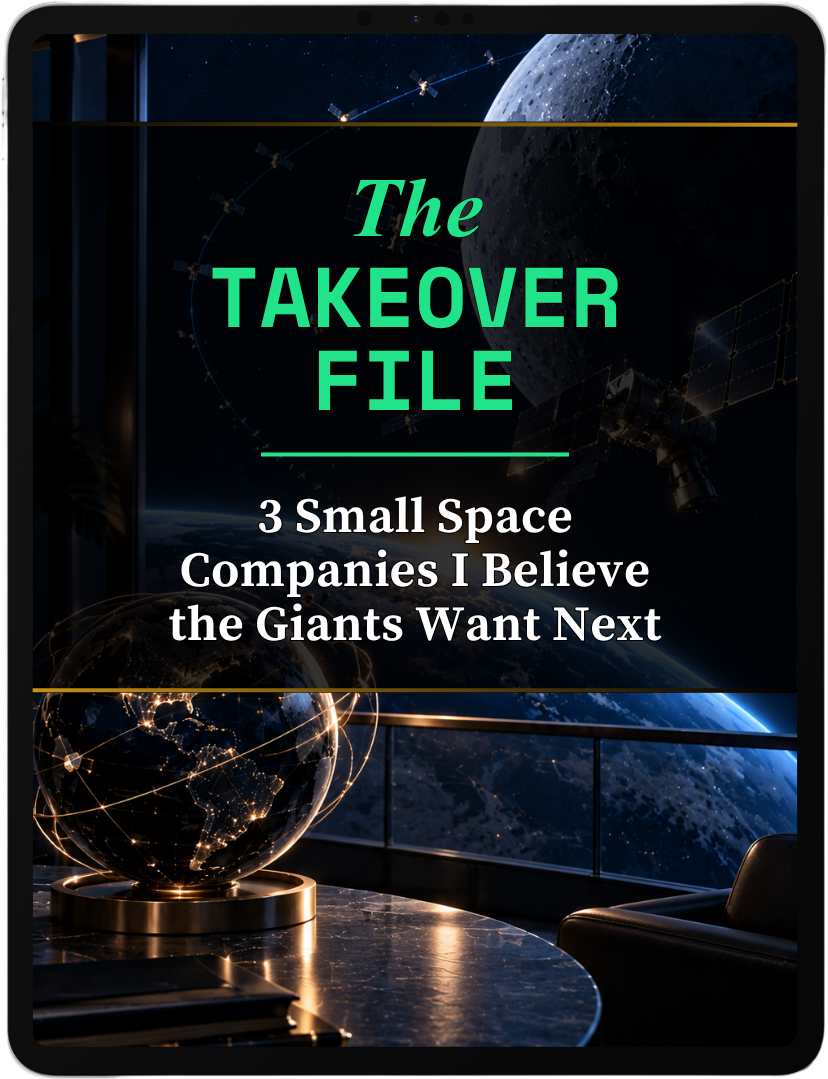
It goes in your Frontier Wealth Kit too.
And I'll tell you something about this particular hunt.
My first reputation on Wall Street, back in the '90s, was for finding companies right before somebody bought them.
US Reinsurance, 70% in four months. Chase Manhattan, 78% in four months.
Paramount... taken over by Viacom three months after I recommended it... a 100% gain.
My readers have banked the same pattern since. Intelsat... a satellite operator... handed them 339% in four months.
Here's what one of them sent in:
Some patterns you get to run more than once.
And if any of this feels over your head... the tickers, the filings, the order types... I've got you covered there too.
The kit's fourth report is:
The Frontier Investor Playbook

The owner's manual for your seat... how to get the most out of every issue, every alert, and every report that comes with it.
Written for the reader who's never bought a stock in his life.
All of this is in the Frontier Wealth Kit... available for you to claim today.
Here's Everything Waiting For You Today
Right now, I'm holding four reports for you:
- Report #1: The Second Window: The Moon's Phone Company
- Report #2: The Space Millionaire Portfolio
- Report #3: The Takeover File: 3 Small Space Companies I Believe the Giants Want Next
- Report #4: The Frontier Investor Playbook

You can claim the whole kit in just a moment.
But first, I have one more thing for you.
I told you earlier that I've built something brand-new for this moment... the first new project I've launched in years.
Here it is.
It's called Frontier Investor.

It has one focus: to put you inside the technology boom that's rewriting the market... space, artificial intelligence, the machines being built above our heads and inside our data centers.
I named it Frontier Investor because that's exactly where the money is being made now.
And I built it for a specific kind of reader.
The one who was never handed a network of insiders. Who doesn't get invited into the funding rounds.
Who works, saves, plays it straight... and still feels like they hear about all the biggest moves in the market just a little too late.
If that's you, this is your seat.
Here's my promise, plainly.
Every issue, I go where the institutions send entire research floors... the filings, the contract awards, the dockets, the quiet paperwork this message was built on... and I bring back the single best opportunity I can find at the frontier.
Then I write it up in plain English and send it to you.
No guesswork. No decoder ring required.
My team and I do the heavy reading. You get the conclusion, the ticker, and the plan.
And it never stops at one story.
The Moon build-out is the opportunity in front of us today. But the frontier keeps producing them.
Orbital data centers. Autonomous defense. The AI supply chain. Robotics.
Wherever the next quiet filing lands, that's where I'll be.
You've already seen what happens when I get there early.
The readers who followed me into Palantir when Wall Street called it overpriced...
Into Rocket Lab when it was a $3.80 afterthought...
Into IonQ years before the crowd...
They didn't need a hedge fund. They needed the letter, and the nerve to act on it.
And here's what the people who've been with me longest say:
Try getting that from a savings account.
Across every closed recommendation in my flagship research service... winners and losers together... 71% have made money, with average gains north of 50%.

My losers sit on the same page as my winners. That's how I'd want it if I were the reader.
One more thing you should know about how I run a research letter.
My own mother owns most of what I recommend. So do my closest friends.
When something excites me or worries me, the people on my list hear about it the same week she does. That's the standard Frontier Investor inherits on day one.
Now, I'll be straight with you about what this is and isn't.
Frontier Investor is not a chat room. It's not a signals app. It's not a firehose of 40 alerts a week designed to make you feel busy.
It's a research relationship. The same one my longest readers just described.
More than 500,000 readers across 28 countries have followed that research.
And when you take your seat today, here's what you gain instant access to:
Your monthly Frontier Investor issue. One deeply researched opportunity at the frontier, torn apart and laid out... the name, the ticker, my buy-up-to price, and the case, start to finish.
The complete model portfolio. Every open recommendation I'm tracking, where it stands, and what I'd do about it today.
Buy and sell alerts. When a position needs action, you hear from me right away. Not in next month's issue.
And special situation reports, at no extra charge, whenever a story breaks that can't wait.
Plus everything I promised you today, the moment you join:
- #1: The Second Window: The Moon's Phone CompanyThe complete case on the company at the center of this message. The one with the NASA contract and the application at the FCC. Name. Ticker. Buy-up-to price.
- #2: The Space Millionaire PortfolioEvery other company I want you to own for the boom, with the reasoning behind each one.
- #3: The Takeover FileThree small space companies showing the signature that showed up before Maxar, before Iridium, before Globalstar.
- #4: The Frontier Investor PlaybookSo none of it is ever over your head... even if this is your first stock.
In a moment, I'll show you exactly what a seat costs... and why you can access the whole package without risking a dime.
So the only question left is the one Wall Street would rather you never ask about anything...
What does it cost, and why?
What a Seat Costs... and Why
Running research like this isn't cheap.
You saw why in my story earlier.
The paperwork is public, but the reading is a full-time job.
Databases every morning.
Filings at night.
Contract awards, dockets, quarterly reports... my team and I live in them, so you don't have to.
The retail price of a year of Frontier Investor is $5,000.
Considering some of my recommendations have sailed as high as 2,700% or more from the price I told readers to buy...
Meaning every $5,000 could have turned into more than $140,000...
I think $5,000 is a drop in the bucket.
But I'm not asking you for $5,000 today.
Because Frontier Investor is brand-new... so I want to do something special today.
I want you to have the chance to be a founding member.
So today, on this page and nowhere else, the founder's price is 60% off retail.
A full year of Frontier Investor. For just $1,997.
That works out to about $5.47 a day. Less than you'd spend on lunch.
And look at what that gets you:
Every monthly issue of Frontier Investor, starting with the launch issue...
The complete model portfolio, and every buy and sell alert the moment they matter...
- Report #1: The Second Window: The Moon's Phone Company...
- Report #2: The Space Millionaire Portfolio...
- Report #3: The Takeover File...
- Report #4: The Frontier Investor Playbook...
Now let me take the last bit of weight off this decision.

You get a full 30 days to decide if Frontier Investor is right for you.
Read every issue. Open every report. Follow the December story as it plays out in real time.
Buy a recommendation or just watch how they're handled.
And if at any point in that window you feel I haven't delivered exactly what I promised you today... call my customer care team, or just send one email... and you get every dime back.
All of it.
So the honest arithmetic of today looks like this: the upside is a seat on the right side of the biggest migration of money in market history... and a real shot at being one of the millionaires it mints. The downside is a few weeks of reading that cost you nothing to keep.
I've been an investor for 35 years, and I've been writing about the markets for readers like you for 20.
I take my work seriously. I sign my name on every issue, every recommendation.
My firm doesn't publish a word without my approval.
That's because I am determined that when we bring information to the public — to readers like you — it has my complete convictions behind it.
In a moment, I'm going to show you how to access all the resources I've prepared.
But first, we need to take a look at the most important date in this message.
The date of the biggest migration of money in the history of the stock market... starting December 8th.
Let me show you now.
December 8th: The Morning the Freeze Ends
When SpaceX went public in June, the insiders didn't get to sell.
That's how big IPOs work... the people who owned the company beforehand agree to hold, usually for about six months, so the stock isn't flooded on day one.
It's why only about $1 of every $20 traded at the open.
Since late summer, pieces of that frozen mountain have been thawing on a printed schedule.
But the schedule has an end date.
Day 180.
On that morning, the last restriction lifts.
More than $600 billion worth of SpaceX stock, fully free to move for the first time...
Now think about who's been holding it.
Employees who spent 20 years building rockets. Early funds that bet on Musk when the experts laughed.
People who know the space economy from the inside... and who've had nearly everything they own frozen in one single stock.
What does a person like that do the morning the ice breaks?
They go where they know the money has to go next.
Because they've been insiders at the biggest IPO in history.
Now here's the part I need you to sit with.
The last of that money can't move until December 8th.
You can position yourself this afternoon.
For the next few weeks, the regular investor holds an advantage over the smartest money in the industry... maybe the only advantage you'll ever be handed on a silver plate.
The paperwork is public. The company is trading.
And the people who know the most are handcuffed until the bell.
That's the Second Window. That's why it closes.
The migration is coming. The date is printed. And the map to where I believe it lands is one click away.
Here's what happens when you click. You'll be taken to a secure order form, where you take your seat in Frontier Investor... and you'll review everything before it's final.
Two minutes. Start to finish.
And look at what's changed.
When you opened this message, you'd never heard of a quiet application at the FCC.
Now you know it exists. You know about the contract behind it... the kind NASA had never signed with a single company before.
And you know the date the frozen money comes hunting.
There's one small company sitting where all three of those facts point.
So you have two choices.
Close this page, go back to your day... and maybe watch 17,000 strangers become the second wave of Space Millionaires... from the outside. Again.
Or take the seat. Claim the kit.
Read the case tonight... the name, the ticker, the buy-up-to price... and give yourself the same real shot I laid out earlier: the one I believe could turn $10,000 into at least half a million.
But I have a special gift for you...
One Last Gift: The Stocks to Get RID Of
For every company the second wave lifts, there's another one it's going to bury.
And knowing which stocks to SELL before the sorting can matter every bit as much as knowing which one to own.
Remember what happened after the IPO.
The short sellers weren't wrong about everything.
The space sector really was carrying a crowd of companies with beautiful stories, no contracts, and burn rates that would embarrass a casino.
Here's two of them I promised to share with you today:
Virgin Galactic — the most famous space stock of the last boom — has lost more than 90% of its value, and keeps pushing its first flights further out.
Momentus traded near $34 a share within the past year. It's close to $4 today.
Both still have believers. I'd be a seller of both.
I've written up the five space stocks I believe are in the most danger... names people still own, still recommend, still hope on... in one final report:
Space Junk: 5 Space Stocks to Sell Now

I told you earlier what a network with no callers is worth... just metal in the sky. Some companies are that metal.
This one's a surprise. I never mentioned it until now, and it's yours the moment you join.
So here is the complete stack, one last time:
- Report #1: The Second Window: The Moon's Phone Company
- Report #2: The Space Millionaire Portfolio
- Report #3: The Takeover File
- Report #4: The Frontier Investor Playbook
- BONUS Report #5: Space Junk

And remember, the reports are just what arrives first.
The real seat is Frontier Investor itself... the monthly issues, the full model portfolio, and every buy and sell alert, delivered the day they matter.
All of it for the $1,997 founder's price... 60% off retail... with a full 30 days to decide, a full refund if you want it, and everything I've sent staying yours either way.
One final thing, and read this part carefully.
There are 1,000 founder's copies of The Second Window available today.
This message is in front of a lot of people right now.
So don't let your copy roll to the next reader in line.
Click the button. Review your order before it's final. Done in two minutes.
And then... open The Second Window tonight.
Because here's the last thing I'll say.
On a December morning a few months from now, the Second Window swings open... and more than $600 billion wakes up hungry.
The insiders already know where they'll be standing. The paperwork already told you where the story is headed.
You've seen the map. You know the date. You know what the crowd doesn't.
The only question left is which side of the glass you're on this time.
You've given me your time today, and I don't take that lightly. Thank you.
I hope to see you inside.